


This is part 2 of 4 of the practical polytheism series. Read part 1 here. Subscribe to receive the full series over email:
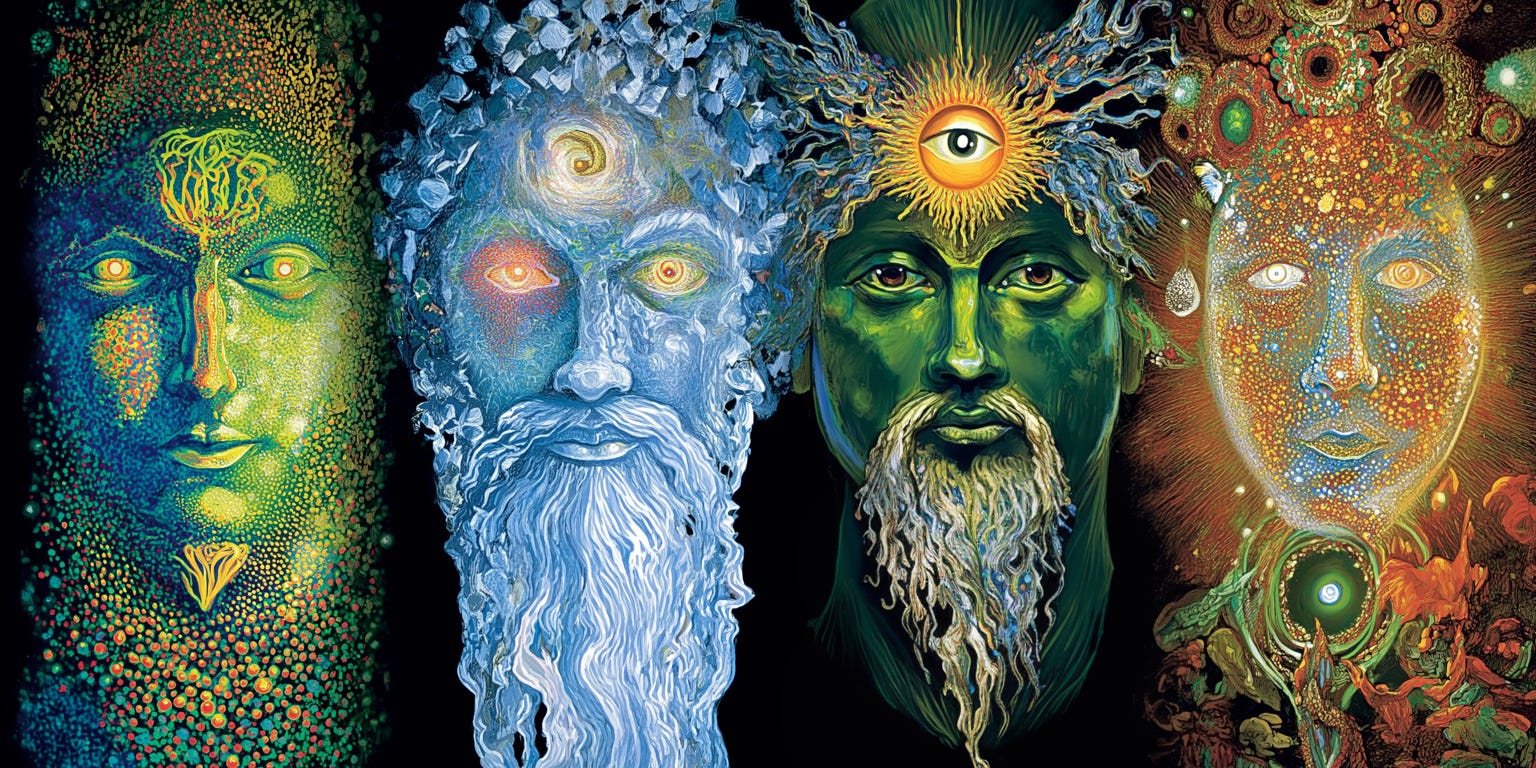
Let’s say you have the greatest forces of your time represented as gods. Now what? You have a variety of options for how to relate to them.
Honor
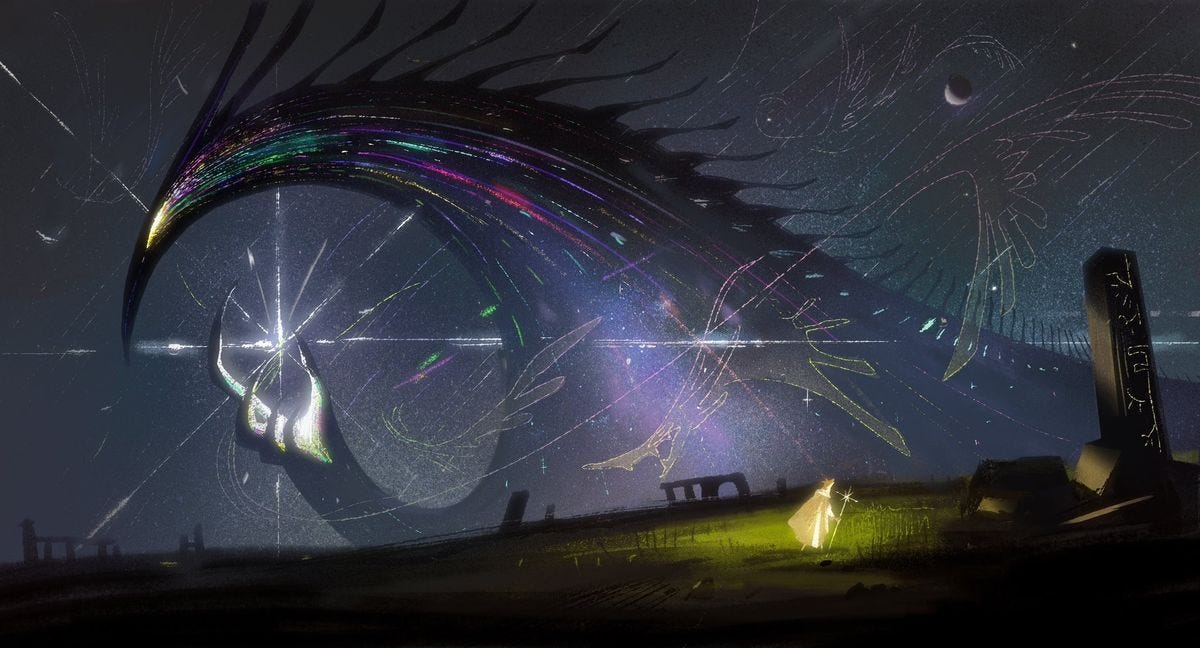
By default, you honor the gods. I prefer these terms – “honor the gods” – over modern terms like “analyze social and physical forces.” You cannot rely on mere intellectual analysis to track the movements of great forces. They are too complex, and the intellect is bandwidth-limited. You must invoke the reverence that comes with honoring.
I mean something specific by reverence here. Our culture uses the word reverence in two opposite ways. Google the word and you’ll see them epitomized by two wildly different postures:


Head-bowing reverence is appropriate for your initial honoring of a force. It is appropriate to show humility before forces vast beyond our ability. However, open-armed reverence is the style needed for some degree of comprehension of that force. Open-armed reverence is the state which allows implicit knowledge to pervade your nervous system with high bandwidth. This leads to experiences like the jazz musician who can sense where the ensemble is going before anyone signals. It may be challenging for you to open yourself to a force you may hate – whether it be leftism, the alt-right, capitalism, or bureaucracy. But I argue that open-armed reverence is required to absorb knowledge of extremely complex phenomena.
Yes, you honor even the forces you don’t love. Take the force of gravity (which, as far as I know, was never assigned a god). Even if we’d rather fly weightlessly around the air like angels, we must honor – and build our lives around – the god of gravity that pulls us down to earth.
In the ancient world, as far as I can tell, Zeus was both enormously honored and little loved. He was a king whose domain you couldn’t escape. And he still is, for the capriciousness of power has proved universal across time. So you must still honor Zeus: build your life to account for the capriciousness of power, or else be destroyed by it. “Give unto Caesar what is Caesar’s,” as Jesus said. In other words, pay heed to the forces that rule over life on earth.
Again, applied to the modern context, you may not like algorithms or the US government, but you must honor them. Your plans must account for their demands and influence. Otherwise your plans will break in time.
Once you understand that personifying forces as gods is a cognitive strategy, it completely changes the way you read Greek myths. They go from merely enchanting stories to guides for how to honor great forces – how to enter into right relationship with them.
Take the myth behind The Bacchae, the famous play by Euripides. In the play we meet Pentheus, ruler of Thebes, who fails to honor Dionysus properly. Modern people think of Dionysus as the god of wine, but wine provides the disinhibition for what he truly represents: liberation. By contrast, Pentheus represents the human drive toward control. He is adamant about civic order and so suppresses the liberative presence within his kingdom. Spoiler alert: things don’t go well for him.
Dionysus warns him repeatedly: do not fight against a god. It is wise advice. Humans rarely triumph against great forces. Our freedom lies in which forces we choose to devote ourselves to and how we channel them. (More on this below.) Most forces will not be so courteous as to warn us. As we see in the play, the drive toward liberation will give you ample chances to honor it before it resorts to stronger measures. Dionysus gives Pentheus many warnings and signs of divine power at work, but Pentheus is blind to them. And so, finally, Pentheus faces the consequences. The women of the kingdom, possessed by Dionysian frenzy, tear him limb from limb.
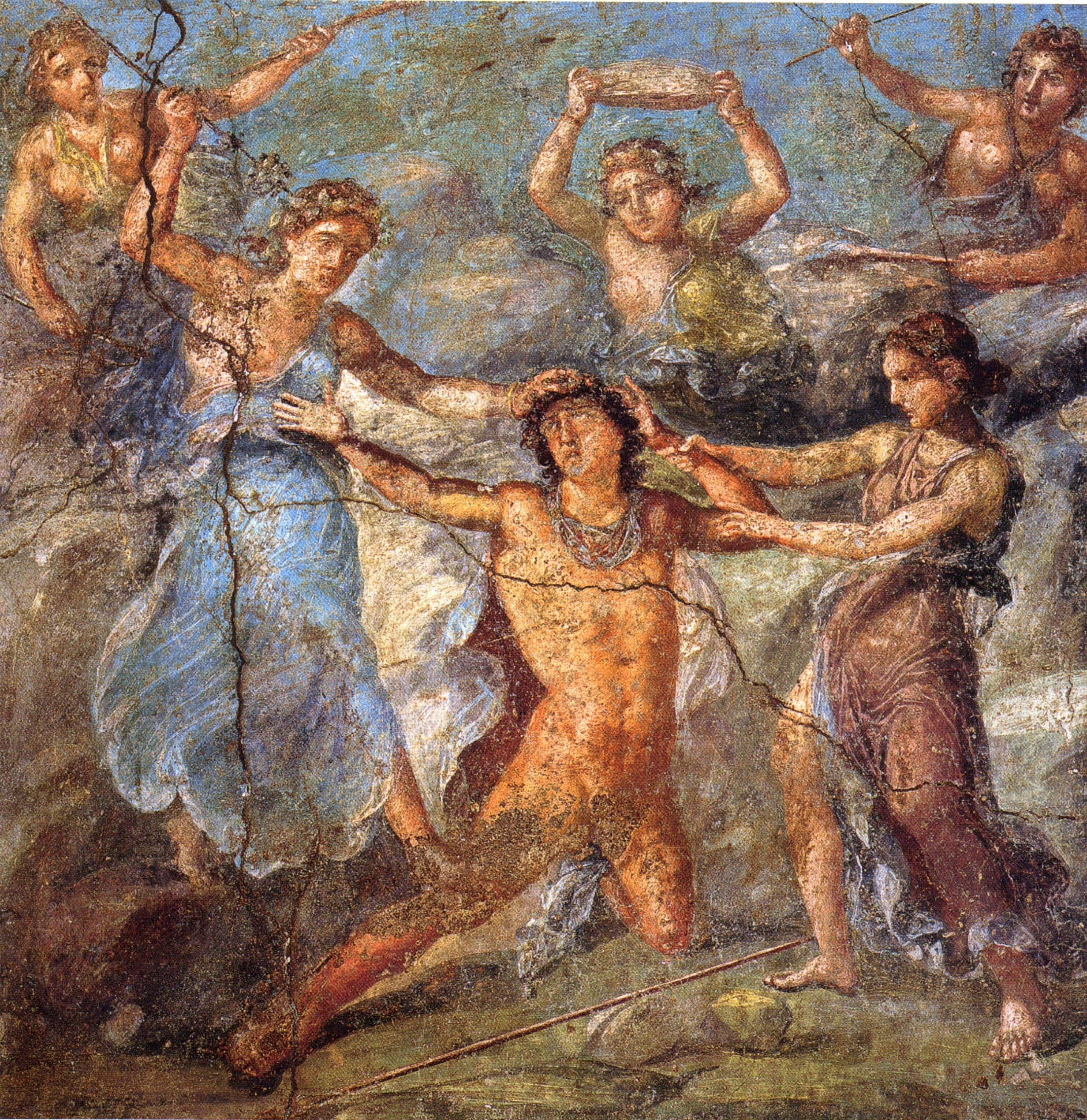
At first glance, this might make you assume that Dionysus is a cruel and jealous god. This is not how I read this myth. I read it as a guidebook. “This is what happens when you do not honor the natural drive toward disinhibition: your mind and your society tear themselves apart.”
All drives, all forces, all gods must be honored.
Worship
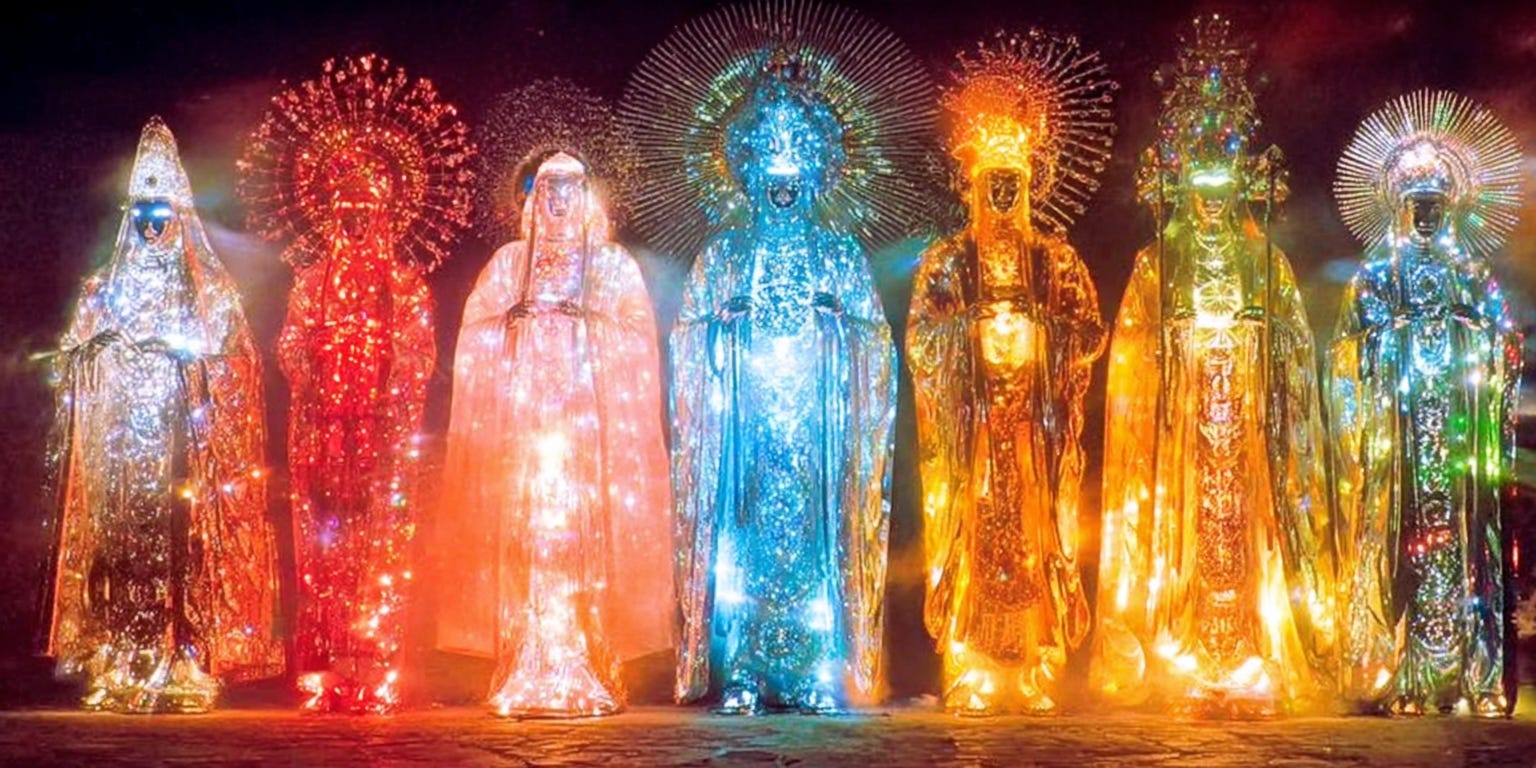
We must honor all forces. And then there are some forces deserving not only honor, but worship.
Practical wisdom (Athena) is worthy of worship. Imagine what happens when an entire city-state worships practical wisdom, and has it constantly on its mind. Maybe you get a place as great as ancient Athens. There are many influential sceniuses throughout history, but it takes the practical wisdom of people like Pericles, Aspasia, Sophocles, Socrates, Thucydides, and – a generation later – Plato and Aristotle to have the type of influence that forms the bedrock of Western civilization.
Liberative ecstasy (Dionysus) is also worthy of worship. Disinhibition is a generative force – if it can be woven into productive relationship with civic life. In ancient Greece, Dionysian frenzy was channeled into public festivities: comedies and tragedies for the stage, wine for bonding and soothing tensions with foreign dignitaries, collective contact with the sublime. And deeper: initiations into the mysteries of the cosmos, enlightenment through the vehicle of ecstasy, as in the Dionysian mysteries associated with Orphism.
How to worship? Give the god what it wants and accept its boons in return.
Here is an example. One time my friend and I experimented with “devotional coworking.” We sat down and imagined that we could tune into Sarasvati, Hindu goddess of learning, arts, and poetic inspiration. Whether “real” or “made up” there was a sense of an enchanting presence. We prayed to that presence for the boon of a beautiful work session, and asked it what it wanted. The answer was expressed through our next actions: First we arranged the room and our desk in an aesthetically pleasing manner. And then I shifted into a state of consciousness that felt like flowing water, song, growing things, the fragrance of flowers. And then I had an exceptionally lovely and generative work session that left me with more energy than before.
In the final post in this series, I’ll tell the story of how I prayed to Dionysus in a similar way, leading to some wild times.
Visionary methods
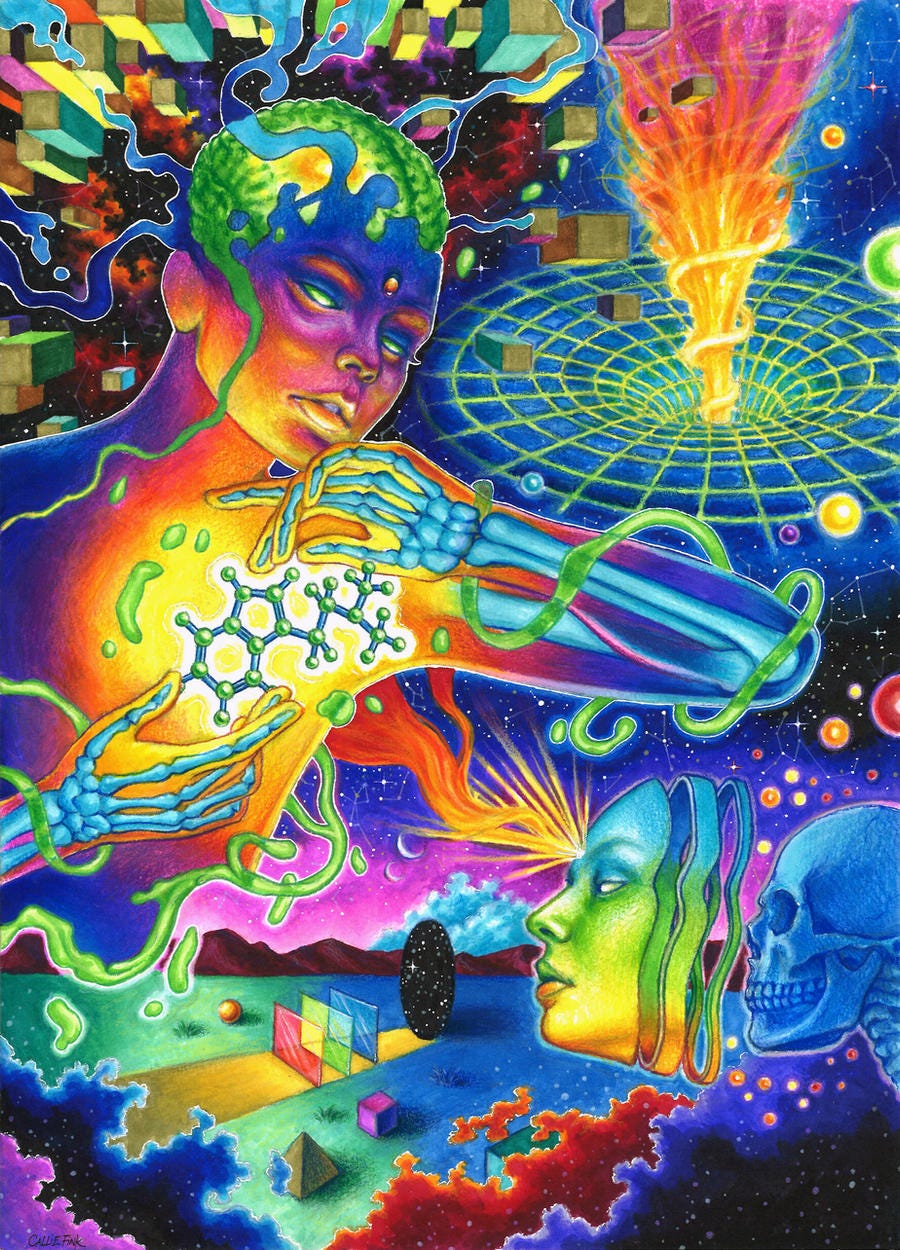
It is possible to learn how to worship a god through intellectual analysis. You can, for example, analyze what the force of Modern Literature wants by looking at bestseller lists, reading critics, and asking your hipster friends what they’re buying. This is a great first step in accessing a god.
But once you’ve exposed yourself to enough of Modern Literature, you can trust your implicit model of that domain to speak to you as if it were a god. This is not psychosis. It is the type of visionary method that thousands of years of our ancestors engaged in before we – of the 21st century – forgot how to listen.
Here is an interesting possibility: What if we are the superstitious ones? We give almost mystical faith ito intellectual understanding while treating imaginal understanding as if it’s only for children and religious zealots. Meanwhile, what history bears out is that imaginal understanding is also the domain of geniuses. Indeed, even geniuses revered by rationalists:
Kekulé dreamed of a serpent eating its own tail, giving him the ring structure of benzene.
Mendeleev saw the periodic table arranged in a dream, elements falling into place by atomic weight.
Ramanujan received thousands of mathematical formulas from the goddess Namagiri in dreams and visions.
McClintock felt the boundary between herself and corn chromosomes dissolve until they became communicative presences. She felt “as if I were right down there and these were my friends.” These friends perhaps “told” her how genetic transposition worked before she won the Nobel, as McClintlock would often speak of how “the material tells you.”
And then there’s Descartes, a man variously called the father of rationalism and methodological skepticism. Descartes had three dreams in one night in which a spirit directed him toward a new universal science. He considered it the most important event of his life.
For more examples of imaginal cognition, or breakthroughs arriving fully formed as if from “outside oneself,” see also Einstein, Heisenberg, Pascal, Pauli, Penrose, Tesla—well, the list goes on. And that’s in the realms of STEM. As you might guess, as soon as you include geniuses from other domains, the list becomes gargantuan.
“How do I try this and not go crazy?”
It’s a valid fear. For every Ramanujan receiving breakthroughs from the goddess Namagiri, there are probably hundreds of people receiving “downloads” who really are just making them up. But likewise, for every Claude Shannon arriving at information theory through rational analysis, there are hundreds of people making unsound arguments through rationalizing analysis. Just as intellectual understanding is an imperfect method, imaginal understanding must also be calibrated.
Here are three ways to maintain sanity around visionary experiences:
Results: Does your breakthrough lead to results in the tangible world? Does it extend your abilities, make you money, help you accomplish a feat of engineering, or yield results in an experiment that others can replicate?
Peer review: The people you respect – what do they think?
Agnosticism: Sure, it may be that you’ve received insights from a supernatural goddess. But maybe you’ve simply received those insights from an unconscious part of your own mind which felt like a goddess. This sort of agnosticism around the metaphysics tames the sorts of wild conceptual leaps common to psychosis. E.g., “If I received them from the goddess, that means I’m the chosen one. And if I’m the chosen one, that means I can bend time. And if I can bend time…” 👈 psychosis.
Attempt this method of visionary insight with the proper precautions, however, and you might encounter something special.
Maybe it’s time to make your own breakthroughs. Identify the forces that you worship. Now simply pretend that the force has a mind of its own, and entreat it: Show me what you would show me. Have me do what you would have me do.
Listen carefully.
Avatarship
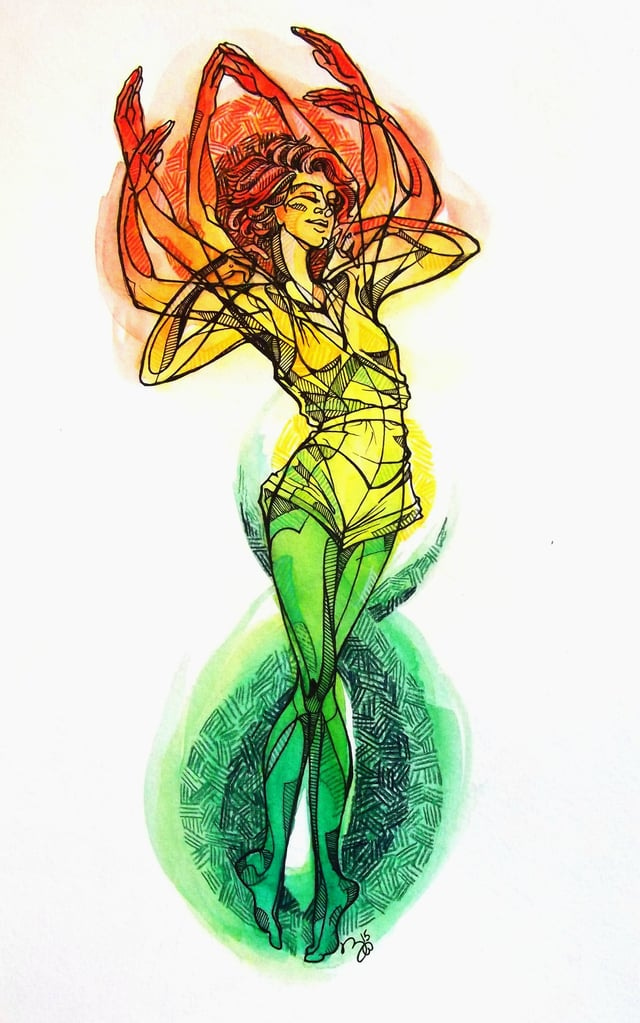
In the Greek myths, there are humans who so embody a particular god’s domain that they become theophiles – “beloved of the gods.” Helen was favored by Aphrodite for her beauty. Orpheus was beloved of Apollo for his mastery of music and poetry. The cunning and strategic intelligence of Odysseus earned him the love of Athena, who saved his life many times.
The purest form of worship is not to make ritualistic sacrifices or sing hymns to a god, but to form yourself into the god’s own image. In return, the god will grant you abilities that may appear superhuman – because they are. You borrow powers from a force far greater than you.
Many polytheistic religions have names for these extreme devotees:
In Shinto, people can become ikigami, or living manifestations of a spirit.
In the Yoruba traditions (which branched into Haitian Vodou), a person could become elégùn, “one who can be mounted.” Your alignment with a divine force, or an òrìṣà, becomes so complete that you gain its temperament, powers, and vulnerabilities.
In Tibetan Buddhism, someone can be an emanation of a deity, or a tulku. The Dalai Lama, for example, is considered a tulku of Avalokiteśvara, the deity of compassion. This sort of god-becoming is quite important in the tradition: even those who are not technically tulkus practice it. Advanced practitioners can “become” one of the enlightened deities of the tantric Buddhist pantheon in a practice called deity yoga. “Becoming” here means entering into continuity with the enlightened activity of that deity.
In Hinduism, there’s no singular term for a human who embodies a particular god. However, deities may incarnate as human avatars, a term that Western culture already uses. From now on, I will use the term avatar for this concept: of a person who fully embodies a force.
One way we use the term avatar is for video games. Just as you use your controller to move around your avatar in a simulated world, a god uses its avatar’s nervous system to move the avatar around in the incarnate world.
You already know many avatars. Nearly anyone famous is one, whether they know it or not.
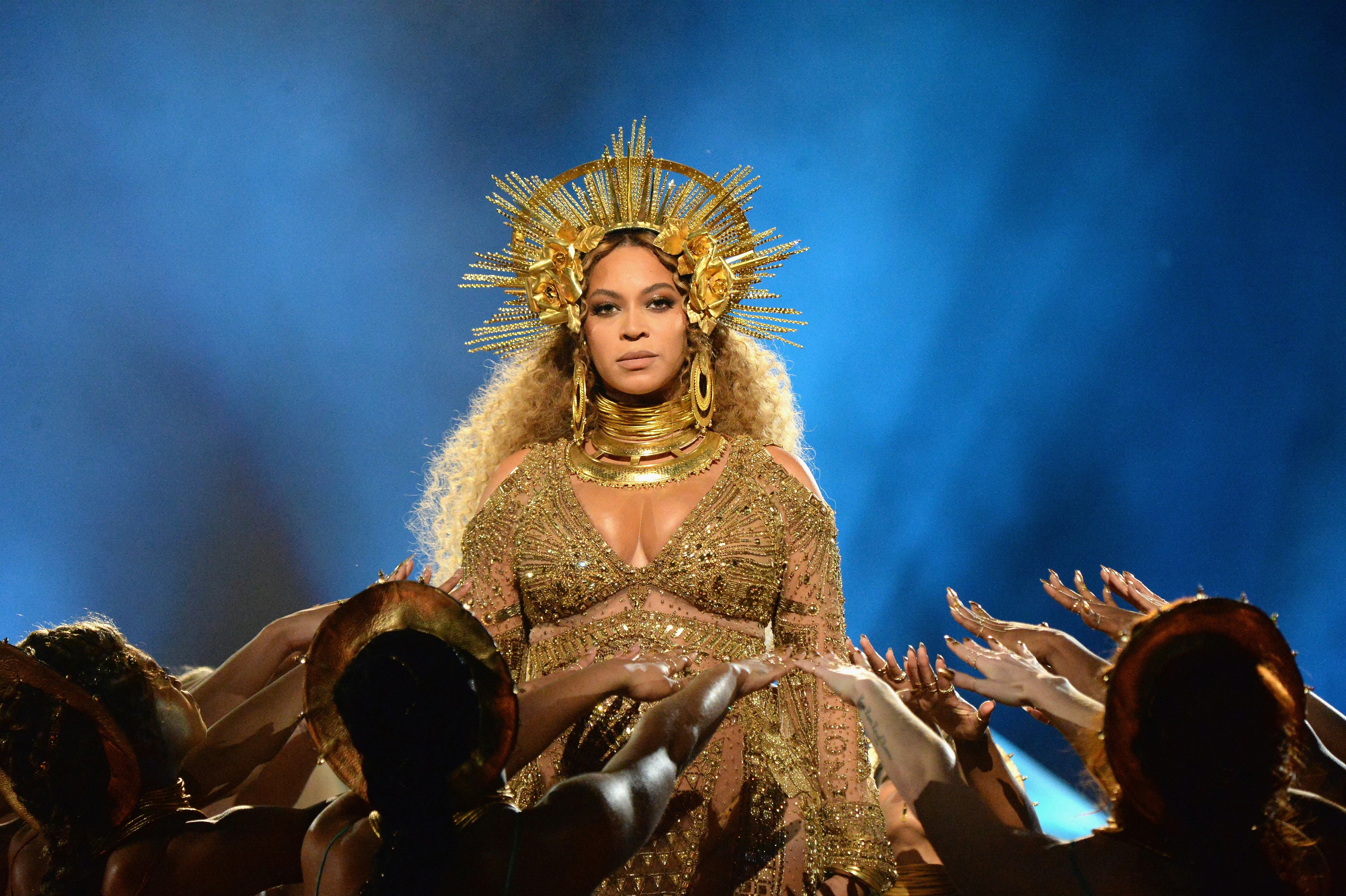
Beyoncé is an avatar of the pop culture god. The pope is obviously an avatar of the god called “the Catholic Church.” Several famous figures have lately become avatars of Eris – goddess of strife and discord. Some of these figures used to be avatars of their nations or avatars of business, but they have found greater profit as avatars of Eris. As you can see, you can switch which god you are an avatar of within a lifetime. You can even be an avatar of more than one god at a time.
Avatars are people who not only give the god what it wants, but actively extend the god’s influence into the world. As a reward, the god provides boons to the extreme: the pinnacles of status, billions of dollars, worldwide influence over the hearts and minds of those who participate in the god’s force.
However, in a world that prizes monotheism – devotion to one god only – the price of becoming an avatar can also be greater than expected. In the next essay, I’ll talk about how I became an avatar, and how it nearly destroyed me.
Next post: “The gods of modernity.” Substacker oh writes that polytheistic culture can be seen as “a technology for comprehending and potentially steering the collective consciousness.” The next post will touch on how we might comprehend and steer the forces of today. Read it here.
Yes! If we see the gods as the hive like behavior patterns of the culture it makes total sense.
They're archetypes that people follow.
My understanding is that every action we make is feeding some god. Kind of like how atheists thought they were the first people in history to not be living in a myth. But it turns out they still live in a myth they just pretend they don’t.
Better to be explicit about it