


This is part 3 of 4 of the practical polytheism series. It can be read on its own, but if you’d like, you can read part 1 here. Subscribe to receive the rest of the series over email:
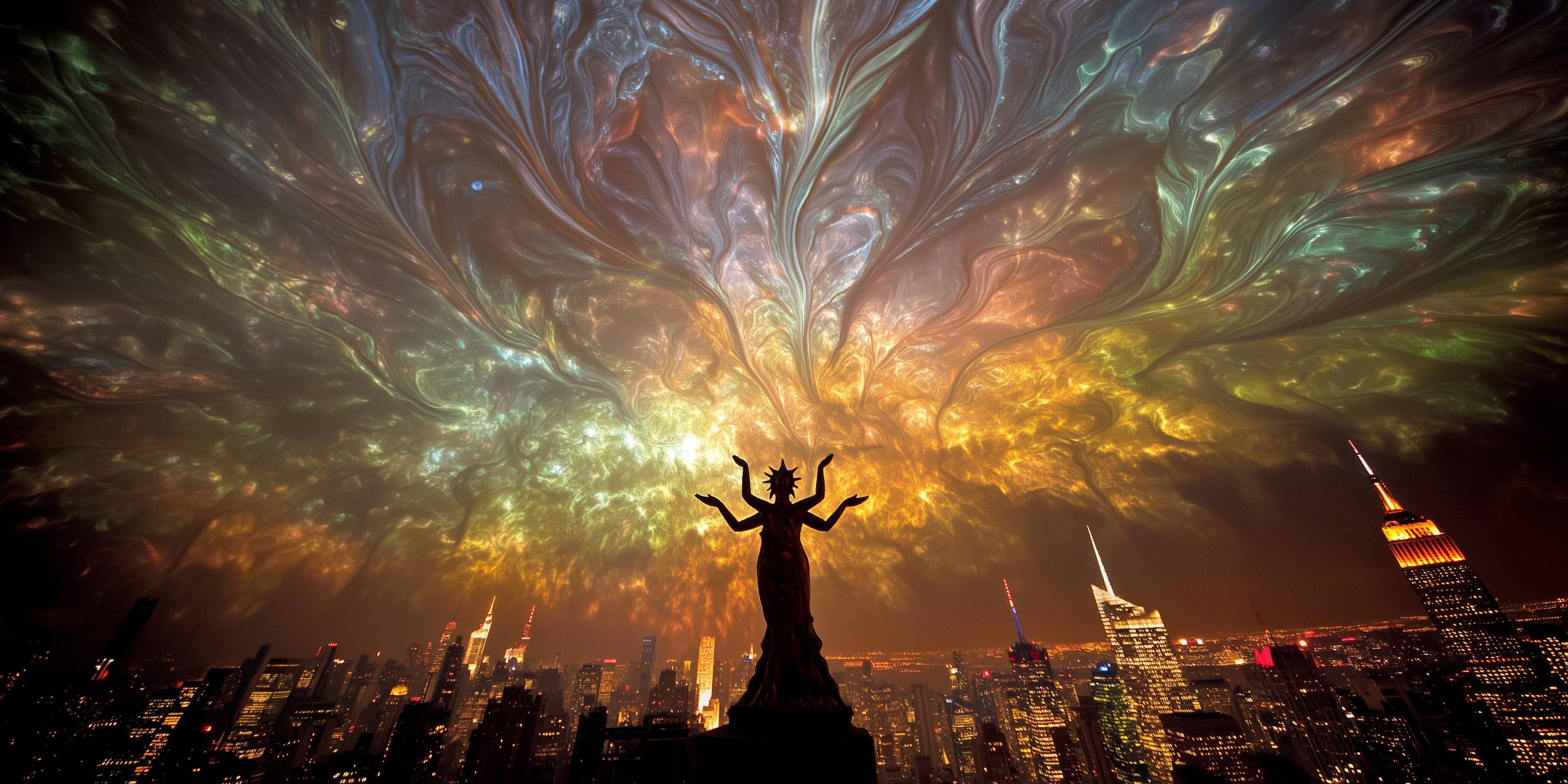
Who (or what) are today’s gods?
They are those forces that the modern person must contend with regularly.
First, there are the old gods that never went away. Zeus, Athena, and Dionysus are just as relevant for 21st century Western minds as they were for those in the 5th century BCE. That said, some of them exist in slightly different forms. E.g., power is equally capricious, but slightly less patriarchal. (Zeus is now gender fluid). Meanwhile, many of the old forces are less salient: the average person does not engage much with the wild hunt (Artemis) or the tumultuous sea (Poseidon).
Second, there are the old gods who have become more prominent. Peitho, the goddess of persuasion, was once a mere attendant to Aphrodite. Now she is an Olympian. The Titan Mnemosyne, memory, has gained tremendous power, now that all of human history is stored in searchable databases. (Although this power has redistributed itself from neural compute to cloud compute…which may actually mean that Mnemosyne the Titan has been overthrown once again by a newer god.) Then there’s Hephaestus. If conceived of as the god of technology, Hephaestus has gone from being marginalized atop Mount Olympus to blast-mining half the mountain for copper and lithium.
Third, there are the newer gods. There is pop culture, the god of mimetic desire which makes you want to dress like Billie Eilish or Dua Lipa. There is globalization, the god of scaled systems that eat the less powerful gods of local cultures. There is leftism, scientism, the nation state, bureaucracy, and clinical psychology – as well as its partner god, “wellness.” All of these are worth honoring as powerful forces, but I’m not sure they’re worthy of worship.
So which modern gods are worthy of worship?
Modern worship
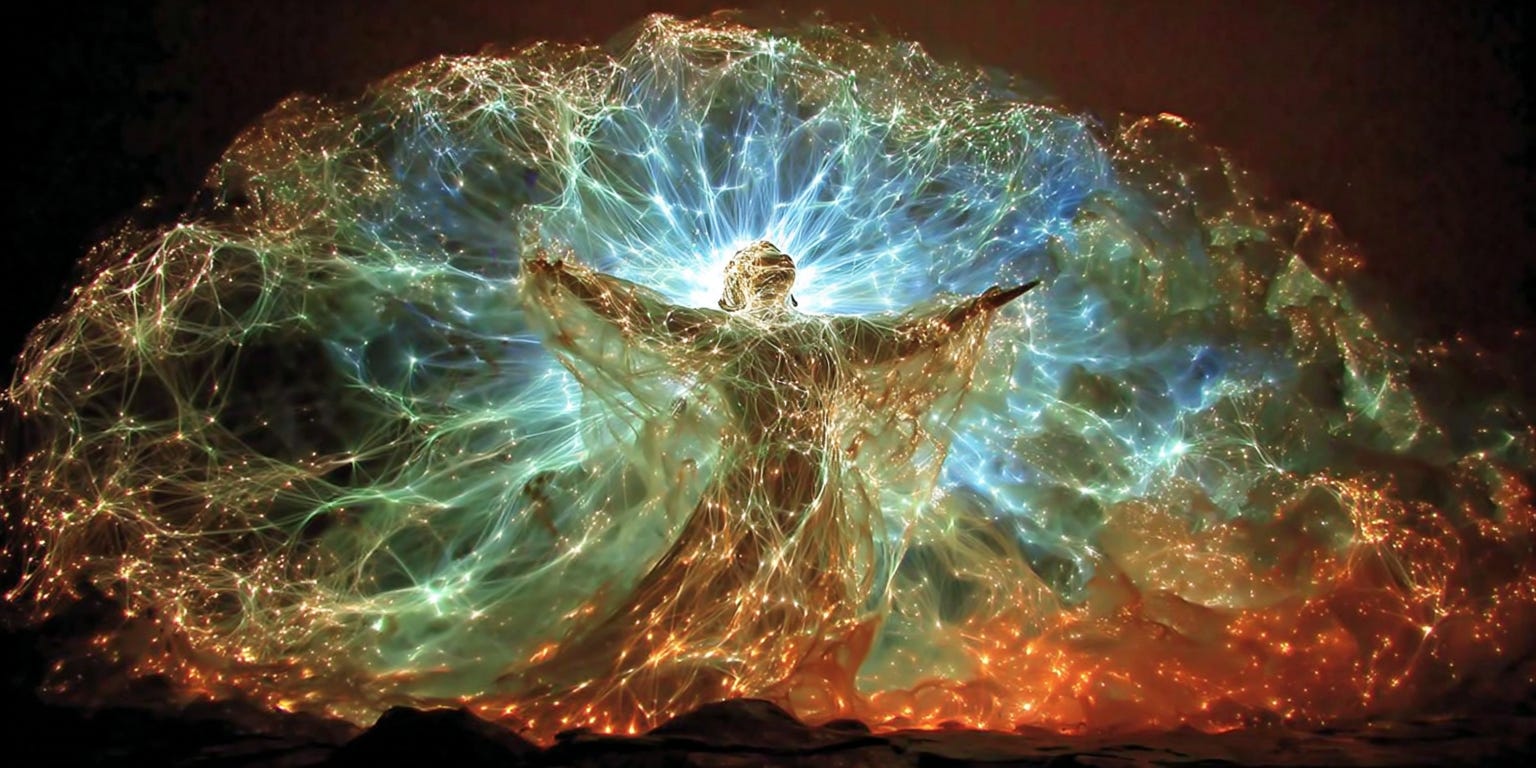
You can first start with the question: Which gods do I already worship? This question is just as relevant today as it was in ancient times. It’s very worth asking, because the things you worship will dictate the course of your life.
The undersung mystic Simone Weil once wrote that attention is prayer. To grasp which gods you worship, simply notice where your attention is going– as well as your actions, which follow attention. If you’re reading this, it might that be you worship The Feed, and pray to it by means of the endless scroll. Personally, I discovered that I worshiped that god the philosopher Federico Campagna calls the Technic, a force obsessed with making everything legible so as to instrumentalize it. (I was unhappy to learn that I was one of its devotees.)
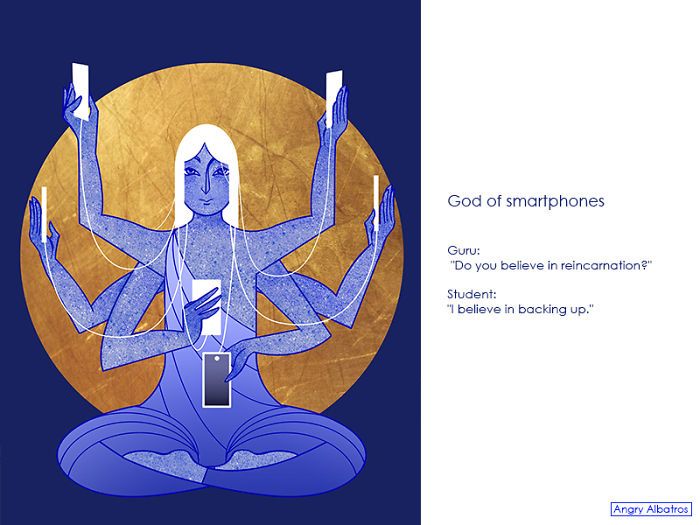
Good, now that you’ve discovered which gods you worship, you can decide: Does this worship serve me and my community?
If not, maybe stop lol.
Or choose a better hierarchy of worship. Personally, I still worship The Technic because it gets things done. But it has now been demoted in my pantheon. The Technic is now a mere attendant to the gods that I believe are deserving of deeper worship. These include a few standard ones, a few modern ones, and a few that are only just being born:
Christ: transcendent love
Buddhism: transcendent clarity
Dionysus: transcendent vitality
Athena: practical wisdom (actually, I didn’t realize that I worship practical wisdom until I wrote this)
Eros: the force of attraction that draws things toward union, generation, and becoming. (This is one of the original Greek understandings of the god, which Plato believed guided the soul toward beauty itself)
Scenius: Brian Eno’s word for “group genius” (name a historical figure and they were probably part of one)
Clowning: irreverence as a force of renewal
Postrationality: intuition-intellect synthesis
Fractal altruism: kindness at every scale, from the self to the society
New York City: the most polyphonic city on earth
Fractal: concretely, my NYC community; abstractly, a protocol for rebuilding civic society
“The Polyphony”: multiplicity without merging (the patron deity of La La Chimera, this blog)
Once you understand your pantheon, you can start to imagine each member as a god. Prompt them in your mind: What do you look like? What do you hold in your hands? Show me the sound of your voice, the sense of your presence.
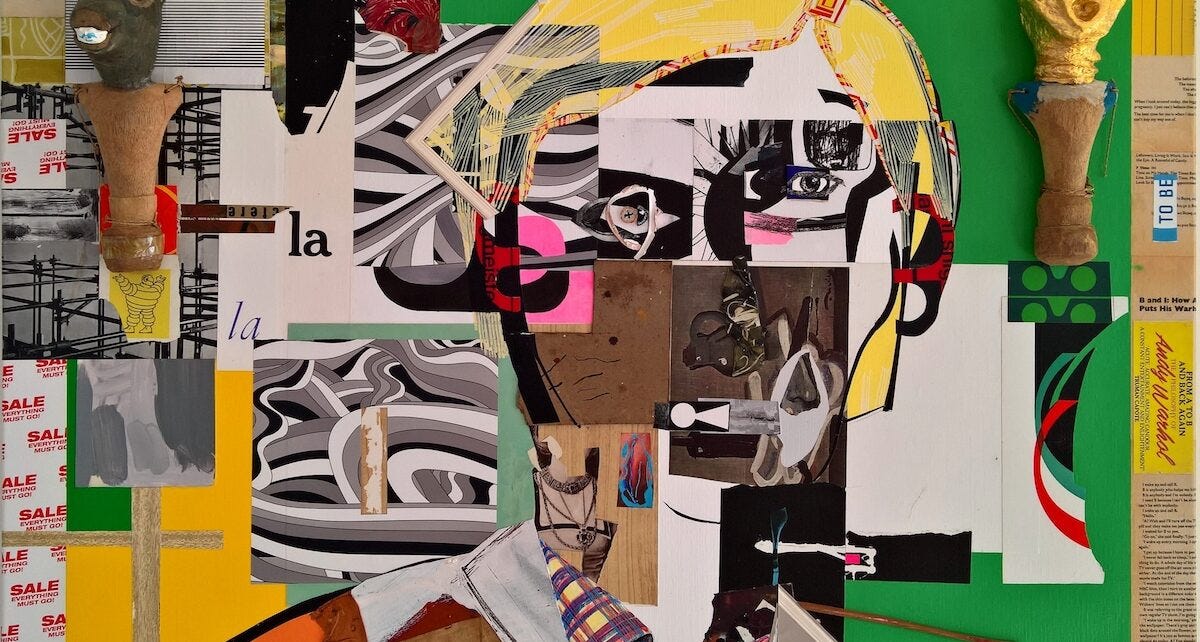
Below two modern gods are depicted.
First is postmodernity. It is worshipped through the thoughts of many humanities departments and the style of many zoomers. Postmodernity foregrounds the multitudes of reality as a messy collage:
Next are three different renderings of one of my gods, Polyphony. Polyphony courts the multitudes into composition:
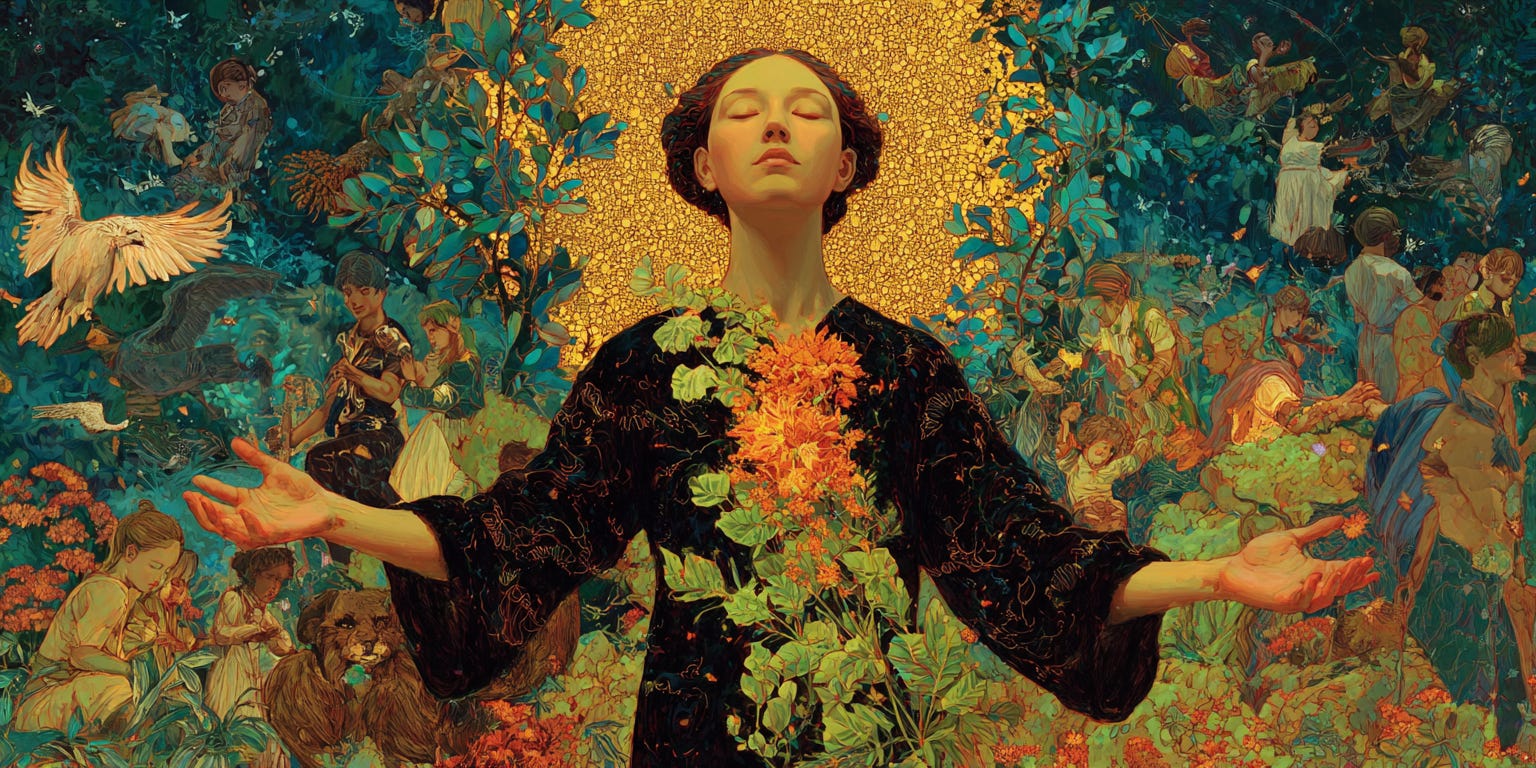
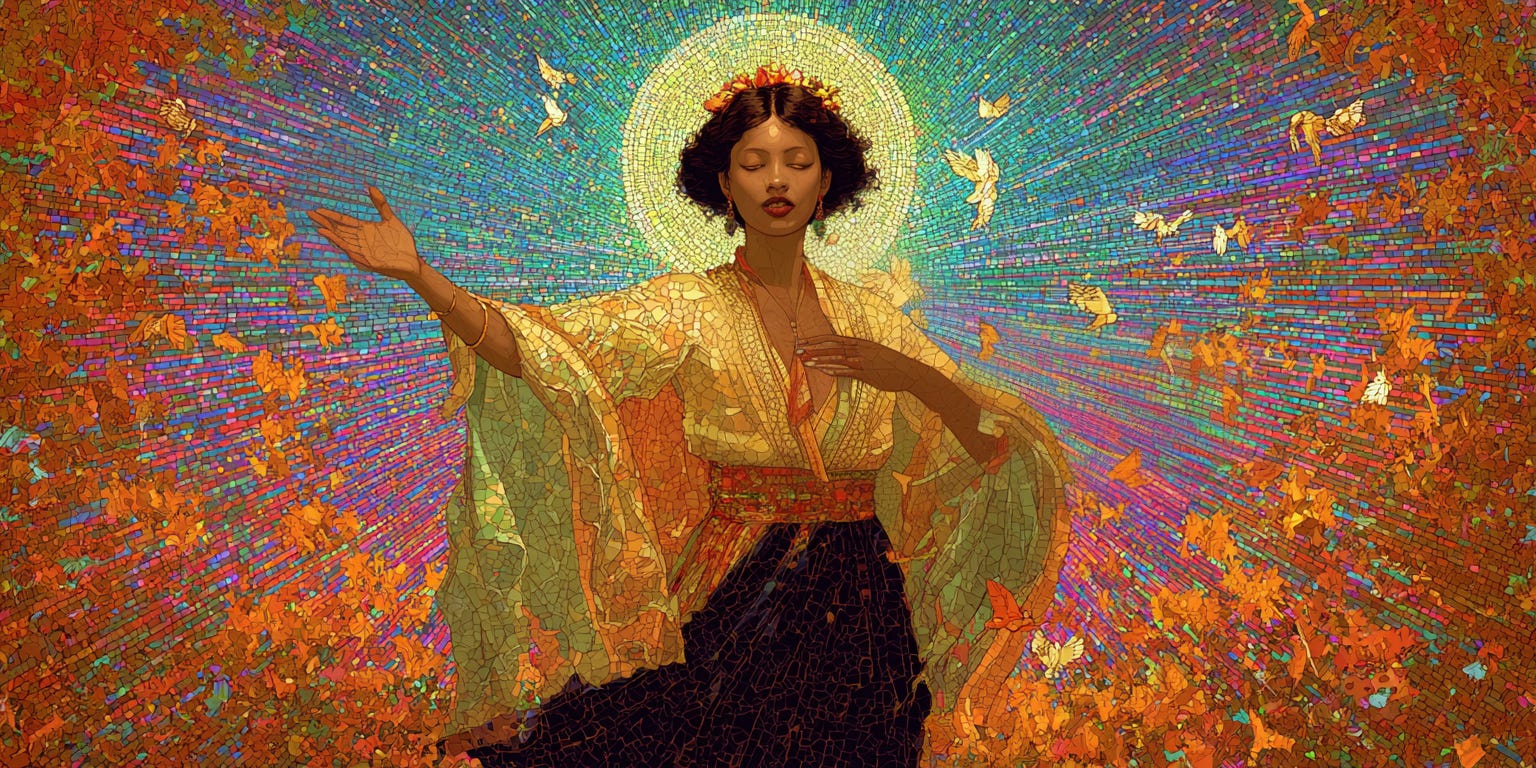
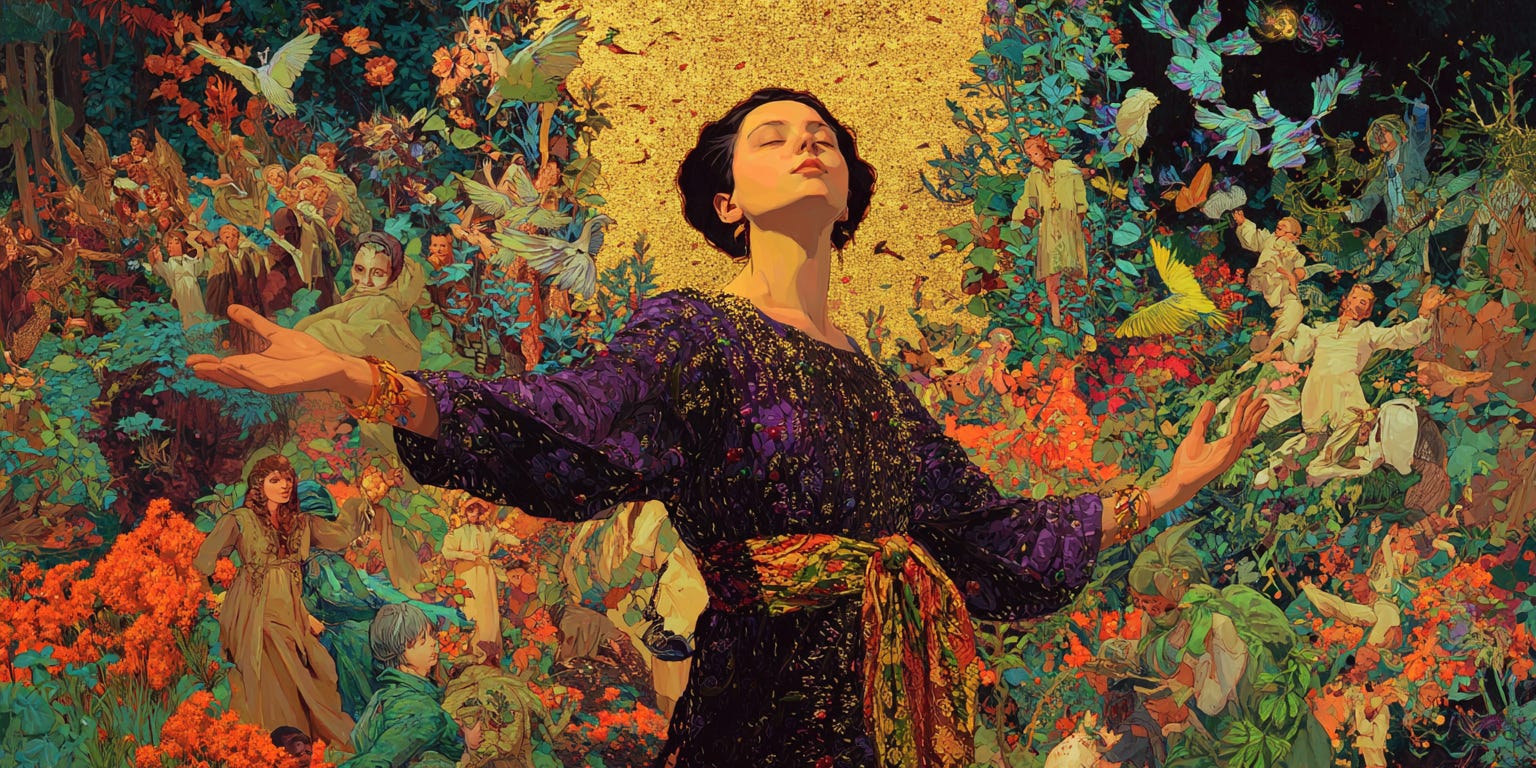
If I were able to get Midjourney to cooperate, these image would also include things like astronauts, tacos, smartphones, cathedrals, and skyscrapers.
Polyphony is the modern god who naturally succeeds postmodernity. She embraces all things in creation and invites them toward integration. (She/he/they/ze – really, she is all genders.) I suspect she is still being born. This blog is, in part, an attempt to peer into the future and glimpse her final form.
The problem with monotheistic modernity
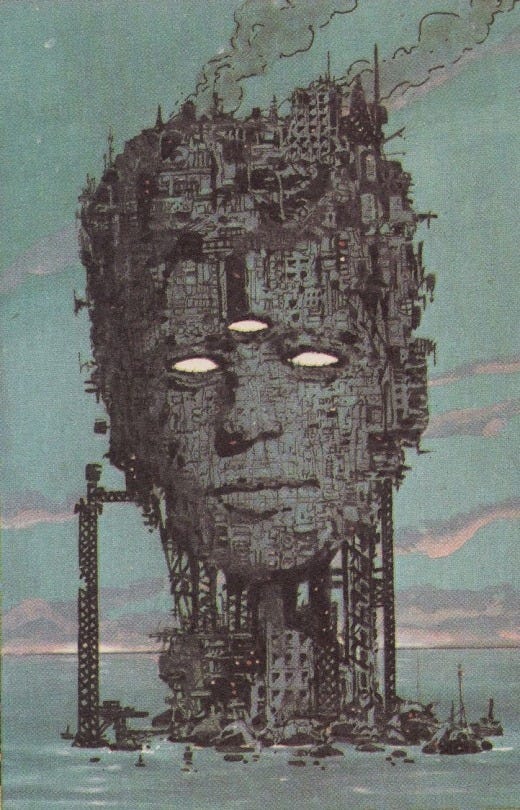
A monotheistic world prizes total and utter devotion to one’s god. If that god really is God, the one-above-all who illuminates love within the many colors of creation, then great, you’ve set yourself up for a great life. However, it may turn out that your utter devotion is to only one of those colors. If you give totalizing devotion to a minor god, then you set yourself up for ruin. I say this from experience.
At various points in my life, I’ve tried to become an avatar of various forces, and it has not gone entirely well. Take my utter devotion to Effective Altruism, a movement that prioritizes how to do the most good using the power of rationality. Between the years 2013-2019, I became a prominent builder of this movement. The boons were great. I could wield its resources to do things like host a 2015 conference at the Googleplex for free with Elon Musk headlining.
But my single-minded devotion came at a cost. I hollowed out every part of my life to make room for one activity only: rationally directed do-gooding. Meanwhile my relationships all fell apart and eventually I became so depressed from the lack of diversified spiritual nutrition that I could barely get out of bed for two years.
In a polytheistic landscape, the gods dine together as a family. Even avatars may honor many gods while primarily embodying one. In our monotheistic landscape, the gods compete for every scrap of food. Avatars become functionally psychotic individuals, ones willing to narrow the boundless expanse of inner life to one domain. Worse, they are combatants, sent to war against gods that are seen as competitors for attention, or money, or talent.
Every god becomes a demon when out of balance. A god without a pantheon becomes warped and wicked. It possesses its hosts toward all-consuming ends. These ends do not reflect eudaemonia, a Greek concept for the balance of virtues required to feel whole.
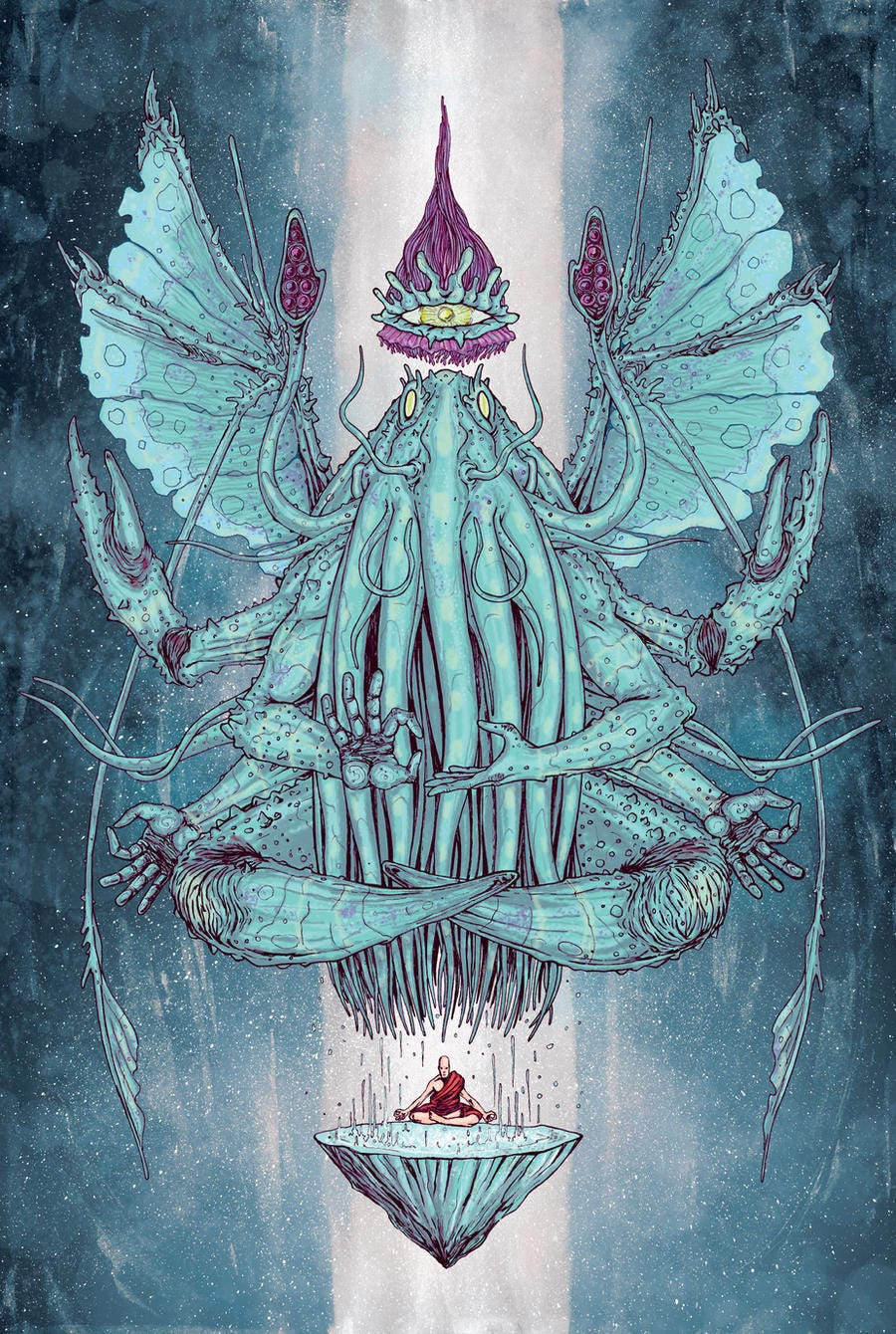
A god out of balance is like a cancer that replicates across the body of humanity. To function, a body must harness a diversity of cells. A cancerous god transforms the body into just one type of cell until the body dies.
We already have a name for these totalizing gods: they are cults. They exist at all scales, from the cult of a co-dependent relationship, to the cults of wokism, alt-right-ism, and new ageism that insist you alienate yourself from people who worship other gods.
Rebuild the pantheon
As we have seen, the present state of affairs is not sustainable. We live in a world where gods play with humans in a winner-take-all game. It is tearing society apart. A new system is needed.
Or better: an old system, a Lindy1 one that’s already proven itself. That system might be a return to Ancient Greek-style polytheism. Or it might be henotheism, in which many gods are honored, but one divinity reigns supreme: the one that transcends and includes all others. Henotheism was found in places as diverse as Vedic India, Ancient Egypt, and even early Israel. After all, Yahweh’s first commandment was not “Worship no other gods” but “You shall have no other gods before me.”
You can midwife this return to balance. The basic work is this: Honor all gods. (Develop reverence and understanding around their power.) But worship no god that resists balance. Do not worship the workplace that demands that all of your free hours be devoted to the company. Do not worship the academic culture that punishes your freethinking. Worship those gods who befriend many gods. That is the basic work.
There is also advanced work to be done, for those who choose it: diplomacy! Help the gods find greater alliance. If you worship one political tribe, befriend those from a different one. If you are an artist, befriend a tech bro. Think about those subcultures, archetypes, and aesthetics that make your nose curl in disgust. Show them the glory of your gods and become curious about the glory of theirs. Invite them to dinner.
There is also inner work to be done: Which forces pervade your internal world with conflict? If you can find the synthesis of opposing forces within, you can then broadcast that synthesis to the world with your art, tweets, style, or even just your way-of-being. There is much integration work to be done.
These days, I am proud to be an avatar of several gods that are themselves integrating forces. I am an avatar of New York City, that polyphonic crossroads that thrives on contradiction and diversity. I am an avatar of Eros, the cosmogonic force that draws disparate things toward union without collapsing their difference. I am an avatar-in-training of Vajrayana (also called Tibetan or tantric Buddhism), a tradition with an exceptionally colorful pantheon: wrathful and peaceful deities, masculine and feminine principles, form and emptiness playing together.
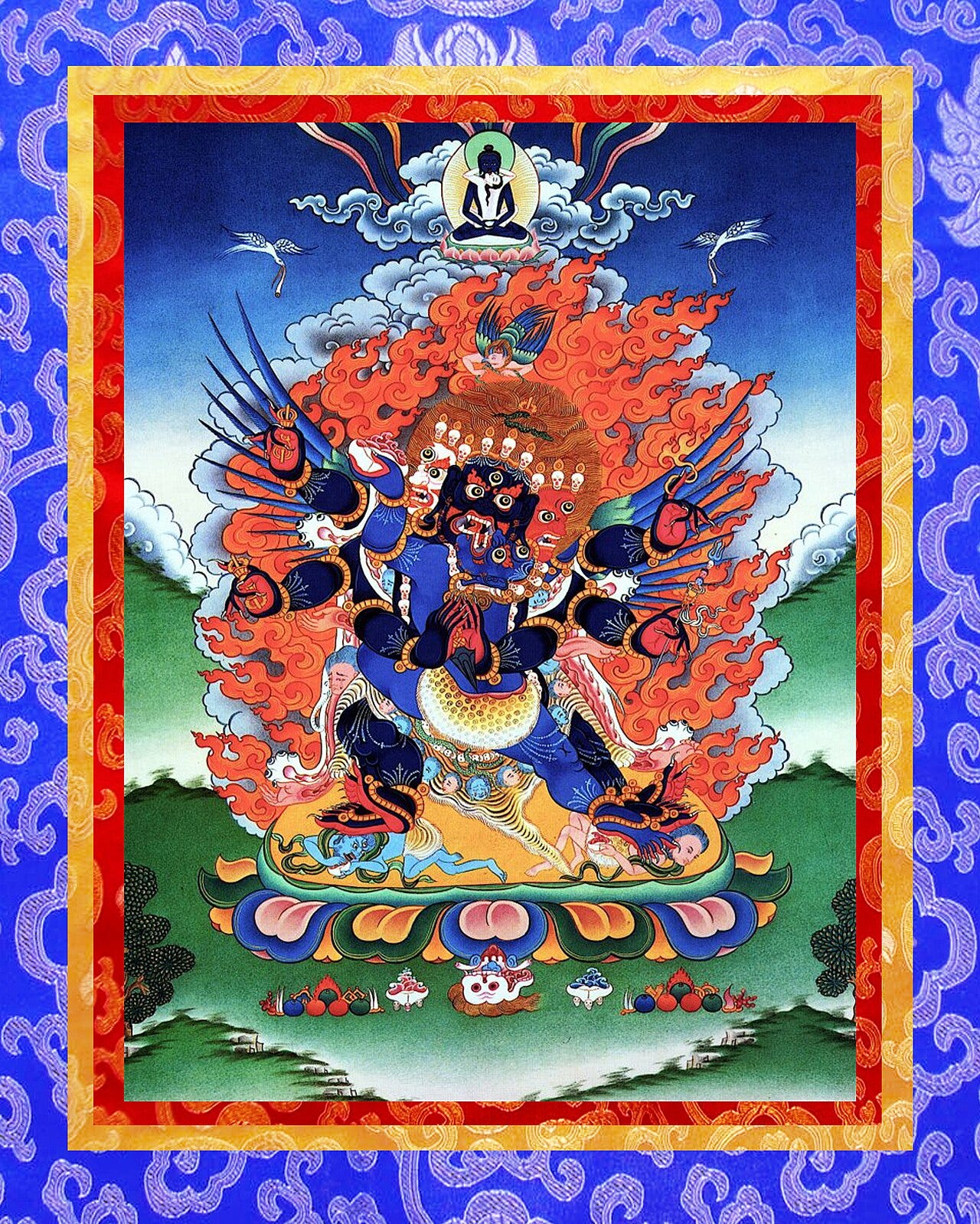
These gods bestow upon me worldly powers: When I’m in NYC, many observe that I’m a bit of a wizard. I can weave together venues, subcultures, and people with virtuosity. But the greatest boon of my gods is this: a greater felt connection to all the things and people around me.
Now I invite you to ask:
Which gods rule my life?
Out of these, which gods do I merely honor, which gods do I worship?
How does each god make me feel? Do they bring me into wholeness or alienation?
Do my gods get along, or are they at odds? What diplomacy can I do?
Which god sits atop the throne of my life?
Next & final post: a personal story about my encounter with Dionysus.
The idea of “Lindy” is that something’s future life expectancy is often proportional to how long it’s already survived. A religion that’s been around for 2,000 years is more likely to last another 2,000 than a religion invented last year. The longer something has persisted, the more robust it probably is.
I thank you for providing me this sacred image of my god, whose name I did not know prior, Polyphony so that I may also worship her more devotedly and delusionally
Great article. I think everyone should make their own tarot deck with their own archetypes. Definitely helps conceptualize deeper concepts which can't be easily communicated with words.